Which Plastics Can't Be Made Into Filament? Thermosets and PVC Explained
Why thermosets and PVC should never go into a filament extruder, what happens if they do, and how to tell which materials are safe to run.
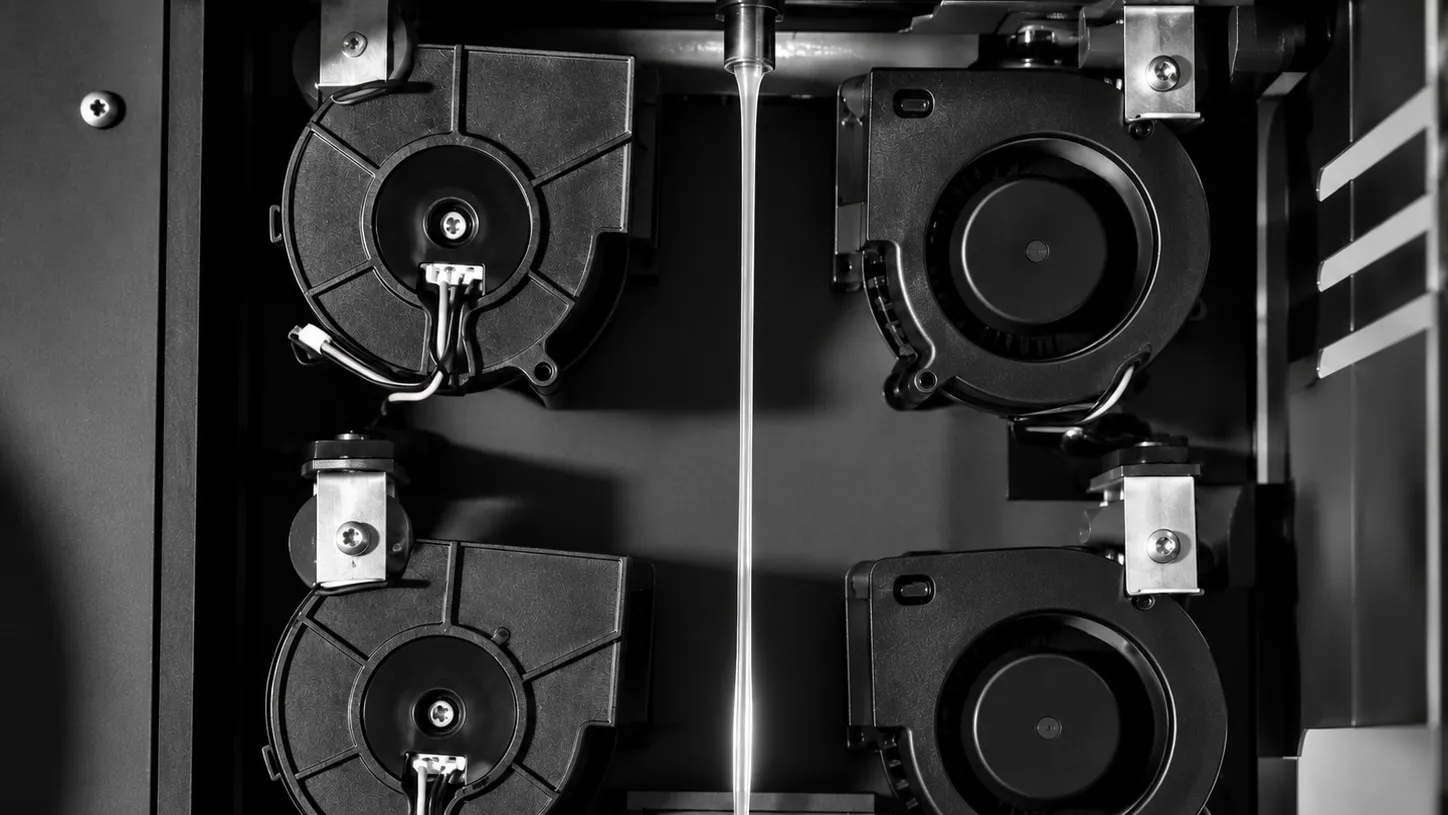
Thermosets and PVC should not be run through a filament extruder. Thermosets cure irreversibly and will not re-melt, so they pack cured material into the barrel. PVC releases corrosive decomposition products at extrusion temperature that attack the screw and barrel. ASTER-C runs extrusion-grade, non-corrosive thermoplastics only.
Key takeaways
- Only thermoplastics can be extruded into filament. They melt and re-melt.
- Thermosets cure permanently and will clog the barrel.
- PVC gives off corrosive products when heated, damaging the screw and barrel.
- Neither is covered by the ASTER-C warranty.
- If you cannot identify a material, leave it out.
A filament extruder works by melting plastic, pushing it through a die and letting it set as a strand. That only works with materials that melt cleanly and set again. Two groups do not, and ASTER-C’s specification sheet rules both out: thermosets and PVC.
Thermoplastics: what an extruder is built for
A thermoplastic softens when heated and hardens when it cools, and it can go through that cycle again. That is why it can be pelletised, extruded, printed and reprocessed. ASTER-C runs any extrusion-grade, non-corrosive thermoplastic from room temperature up to 450°C.
Thermosets: why they clog the barrel
A thermoset changes chemically as it cures, forming permanent bonds. Once cured, it will not melt again. Heat it in an extruder and it does not flow. It cures in place, packing hardened material into the barrel and around the screw.
Common thermosets include epoxies, phenolics and many resins. They have no place in a filament extruder.
PVC: why it damages the machine
PVC is a thermoplastic, but it is a problem at extrusion temperature. As it heats, it releases corrosive decomposition products. Those attack metal surfaces inside the extruder, including the screw and barrel. ASTER-C’s screw is nitrided and chrome plated and its barrel is case hardened, but PVC is still excluded.
The warranty position
Running thermosets or PVC through ASTER-C is not covered by the warranty. Strictly no thermosets and strictly no PVC.
How to stay safe
- Use extrusion-grade material from a known supplier when you can.
- Label scrap bins by polymer, so nothing unknown goes into the hopper.
- When in doubt, leave it out. An unidentified piece of plastic is not worth the risk to the barrel.
- Ask before you run something new. If you are unsure whether a material suits ASTER-C, contact us first.
Frequently asked questions
What is the difference between a thermoplastic and a thermoset?
A thermoplastic softens when heated and hardens when cooled, and can be re-melted. A thermoset undergoes a chemical change as it cures and cannot be re-melted.
Can PVC be made into 3D printing filament?
Not on ASTER-C. At extrusion temperature PVC releases corrosive decomposition products that attack the screw and barrel. It is not covered by the warranty.
What materials can ASTER-C run?
Any extrusion-grade, non-corrosive thermoplastic from room temperature up to 450°C, plus fillers, reinforcements, colourants and suitable recycled material.
What happens if a thermoset gets into the extruder?
It cures in the barrel rather than flowing, packing hardened material around the screw. Clearing it can mean dismantling the barrel.